

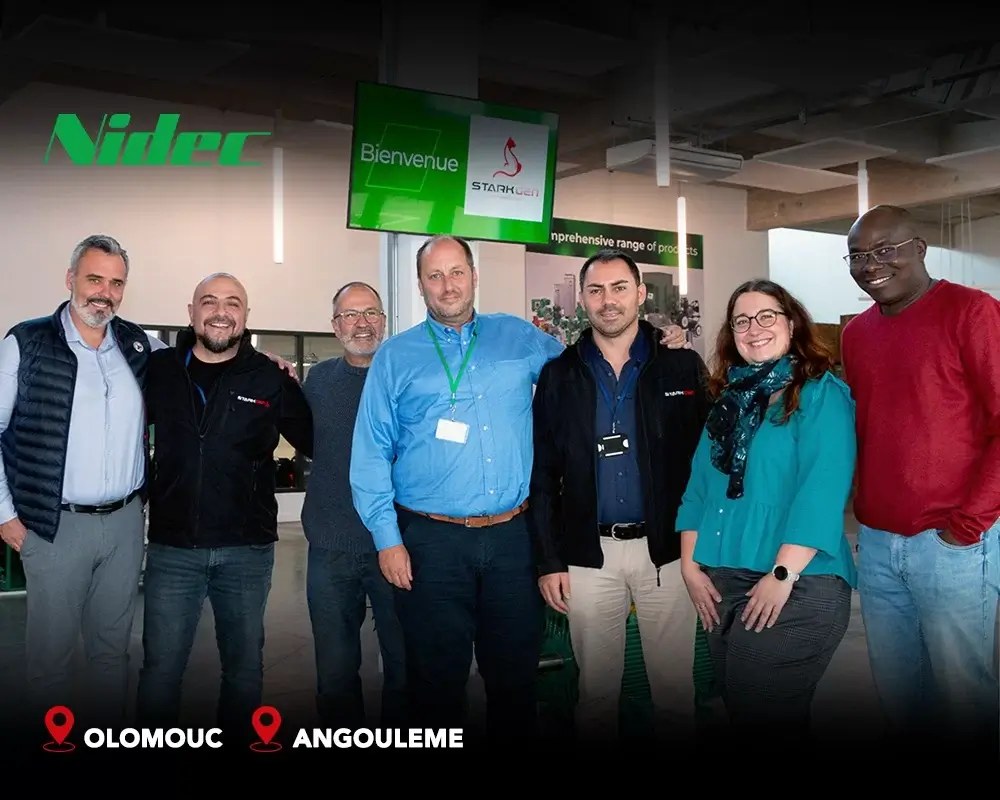
Context Snapshot
Starkgen’s technical engagement with Leroy-Somer facilities focuses on deepening industrial collaboration in alternator engineering, a core component in generator system performance and energy conversion efficiency.
UNEC Perspective
Within modern power generation architecture, alternators represent a critical determinant of system stability and operational efficiency. This collaboration reinforces the importance of energy conversion precision as a foundational engineering discipline, not merely a component selection decision.
Industry Impact
For industrial operators and EPC stakeholders, this translates into tangible operational improvements:
- Higher efficiency in energy conversion across load variations
- Enhanced long-term operational stability under continuous duty conditions
- Improved compatibility with modern dynamic and non-linear load profiles
Technical Interpretation
Key engineering focus areas emerging from such collaborations include:
- Precision voltage regulation under fluctuating load conditions
- Thermal efficiency optimization in continuous-duty environments
- Structural durability enhancements for extended lifecycle performance
Strategic Takeaway
Alternator systems are evolving from passive mechanical components into core enablers of system-level energy stability and performance intelligence.
Related Reading
- Starkgen & Perkins Engines Collaboration – Core Engine Technology Integration
- Strengthening Partnership with ComAp – Control System Intelligence Expansion
- Industrial Generator Systems – Engineering for Continuous Operations
Browse generator sets built with Leroy-Somer and Lynx alternators, or review our quality certifications.
This analysis is based on developments originally reported by Starkgen.

